Data center site selection in Colorado
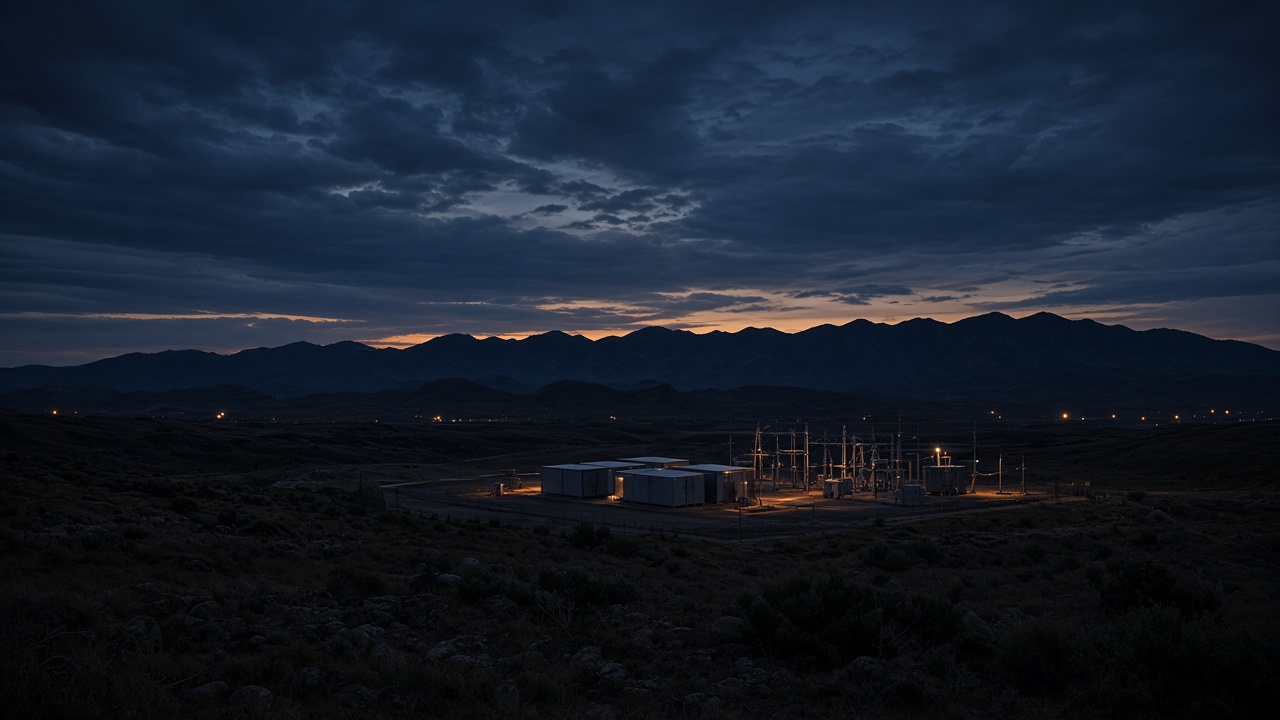
Someone searching for a data center site in Colorado is usually trying to do two jobs at once. One is national: how do you choose any site, in any state, when power, land, water, and fiber do not arrive on the same schedule. The other is local: what changes when the state is high, dry, inland, and split across more than one electric utility. Colorado can be a reasonable place to build. It can also be the wrong site. Those are both allowed to be true.
This is that checklist, with one Colorado example near the end.
What data center site selection is actually deciding
Data center site selection is a comparison of constraints that do not move together. Servers can be ordered. A utility interconnection, a water right, a tax agreement, and a diverse fiber lateral each have their own process. Teams that treat those as paperwork at the end tend to discover the critical path after they have already picked a parcel.
The factors that sort sites in the United States are familiar, and none of them is decorative:
- Power: whether it is available, on what schedule, from which utility, and under which tariff.
- Land and building: zoning that already fits the use, ideally with an existing building.
- Fiber: more than one physical path into the building, not a line drawn along a highway.
- Climate and cooling: what the weather gives you, and what the design has to survive.
- Water: cooling designs that use little consumptive water keep this item simple.
- Tax and incentives: what a state or county actually exempts, and what you must build or employ to qualify.
- Distance: from users, from a carrier hotel, and from the people who will staff the site.
A site that wins on power and loses on water is not finished. A site that wins on incentives and loses on fiber is not either. Primary US markets — Northern Virginia, Dallas, Phoenix, Chicago, Atlanta, and their peers — are where contractors, spare parts, and interconnection are thickest. They are also where adding a large new electric load has been hardest. That tension is why site searches keep leaving the obvious metros. Leaving is not the same as arriving.
What an energized data center site offers
An energized data center site is one where the utility has already connected capacity and that capacity is in service. That puts a project on a schedule it controls, which a parcel beside a substation or a feeder drawn on a map cannot do.
Nationally, new load has piled into markets that were not planned around this much of it at once. The time to energize fresh capacity is often the long pole, and it is not fully under the developer's control. That is why energized capacity, even at a modest scale, draws attention out of proportion to the acreage. It removes a step, and the rest of the checklist is what completes the site: cooling, water, fiber, zoning, and staff.
A defined expansion path matters too. A site that can grow through a utility upgrade lets a tenant start with the first phase and scale from there.
Power cost, and the Colorado utility map
Electricity is typically the largest operating cost of a running data center. The rate is not a state average you can paste onto every parcel. It depends on the serving utility, the tariff, demand charges, the hours you run, and whether a special schedule for large loads or data centers applies.
Colorado makes the point because electric service is not one company statewide. Much of the Denver metro is served by a large regulated utility. Many places outside that metro are served by electric cooperatives, including CORE Electric in some Front Range territory. A site on one side of that line is not on the same schedule as a site on the other. That can be an advantage: a different schedule and a more direct counterpart.
Compare the schedule with the megawatts actually in service to see what a site really costs to run.
Climate is a real advantage
The Front Range is high and semi-arid. Winters are cold. The air is often dry. Summers are warm rather than humid, and the hurricane problem of the Gulf and the Atlantic is not the local one. For cooling, that is a genuine pro. A design that uses outside air for part of the year gets more of those hours here than it does in a hot, wet climate. Dry air also changes how evaporative equipment behaves.
A few ordinary design notes apply.
- Elevation. The Front Range is high, so the air is thinner than at sea level and air-cooled heat rejection moves less mass at the same fan speed. Select equipment on local elevation data.
- Winter. Hours of free cooling and freeze protection go together, so coils, condensate, and any water or glycol loop are specified for a cold night as well as a mild afternoon.
- Hail and smoke. The Front Range is hail country, and wildfire smoke shows up in summer and fall, so roofs, outdoor gear, and filtration are specified for both.
Water: design it out
Colorado allocates water by prior appropriation, and the Front Range is semi-arid, so cooling design and water are linked. The strongest answer is a design that needs little consumptive water.
The climate helps here. Outside-air economization, a closed loop, and liquid cooling that sends heat to a dry cooler rather than a tower all reject heat without much consumptive water, so the dry air and the cold season do the work and the project avoids the water question.
Tax incentives are a line item, not a strategy
States and counties compete for data center projects. The usual tools are sales-tax exemptions on equipment, property-tax abatements, and agreements tied to investment or hiring. The equipment inside the building is often worth more than the shell, which is why a sales-tax exemption can move the model, and why a property-tax deal can too. They are not a substitute for a site.
A credit you have not qualified for is not a credit. Qualification depends on the statute in force, on whether the local jurisdiction participates, and on whatever investment, employment, or other test the law actually writes down. Those tests are specific, and they change. This piece does not quote a threshold or a rate. A number that has not been checked against the current statute is worse than silence.
Have counsel and the county confirm the address you actually hold. Use an incentive to compare two sites that already work. Do not use one to rescue a site that fails power, water, or fiber.
Distance from the bigger metros
Remoteness is a trade. Colorado shows both sides.
The pro is room, and a shorter path to power than some coastal cores currently offer. A Front Range site within a drive of Denver is not a remote outpost. It is outside the downtown core, which is often why it is on the list: land, an existing building, or a utility territory that is not the metro tariff. Direct interstate access, where you have it, makes the drive ordinary rather than a project of its own.
The con is the distance that remains. Technicians, vendors, and a carrier's meet-me room live in the larger metro. Every truck roll is longer, and the specialized trades that have already built a lot of critical facilities are still thicker in the primary markets. Colorado is also inland. For users on either coast, distance is physics: an inland site is the wrong tool for a latency-sensitive application whose users are in Virginia or California. It can be the right tool for regional users, for work that is not that sensitive, or for capacity you cannot place on the coast. About 30 minutes south of Denver is close enough that people can live in the metro and staff a site. It is far enough that you should not describe the building as if it sat downtown.
Fiber into the building, not fiber on the map
Long-haul routes in the West follow corridors, and Interstate 25 is one of them. A Colorado site along that highway sits close to real infrastructure.
What matters is physical diversity into the property: more than one carrier, on paths that do not share a single cut. Dark fiber you light yourself is a different product from a lit circuit someone else operates. Both can be right.
A Colorado example: Front Range Compute
One Colorado example, Front Range Compute, is being developed by Frost River Capital LLC in Larkspur, about 30 minutes south of Denver off I-25. The site has energized utility service of about 3 MW from CORE Electric at 480V, outside Xcel’s data-center tariff, and supports roughly 2–2.5 MW of IT depending on cooling and redundancy design. Two diverse 100 Gbps fiber paths are available from Comcast, with additional carriers available. Powered land is offered first, with build-to-suit colocation second.
Write the constraints down first
If the search is for a data center site, Colorado included, write the constraints before you write the city. How many megawatts have to be real in the first phase. Whether water is part of cooling. How far staff and users can be. Which incentive you are actually eligible for, confirmed for that address. Whether "energized" is present tense.
A state can be a fair place to develop a data center and still contain the wrong parcel. The site is the thing you can underwrite. The rest is geography.